Faith Healing – Comfort, Culture, or a Public Health Concern?
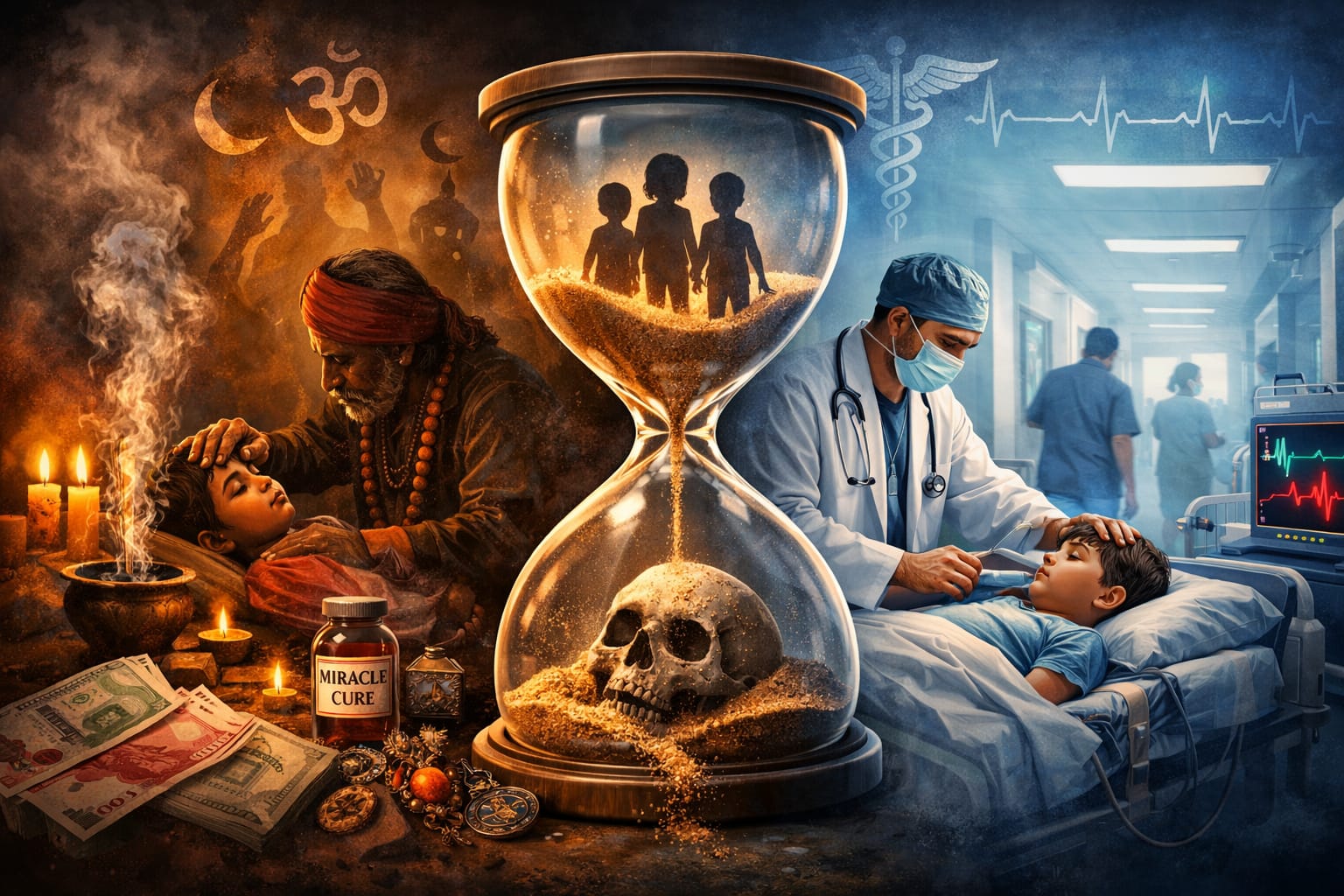
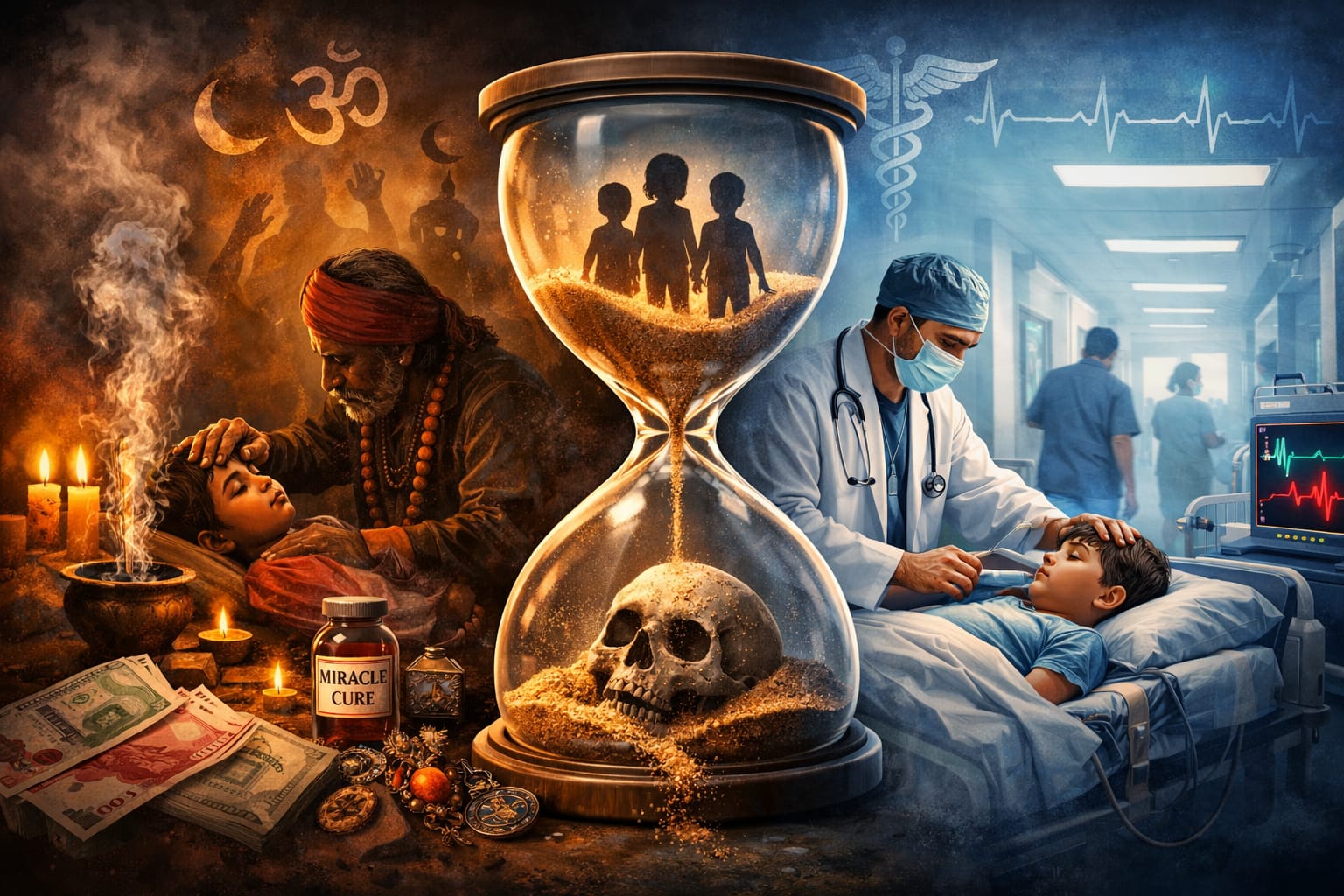
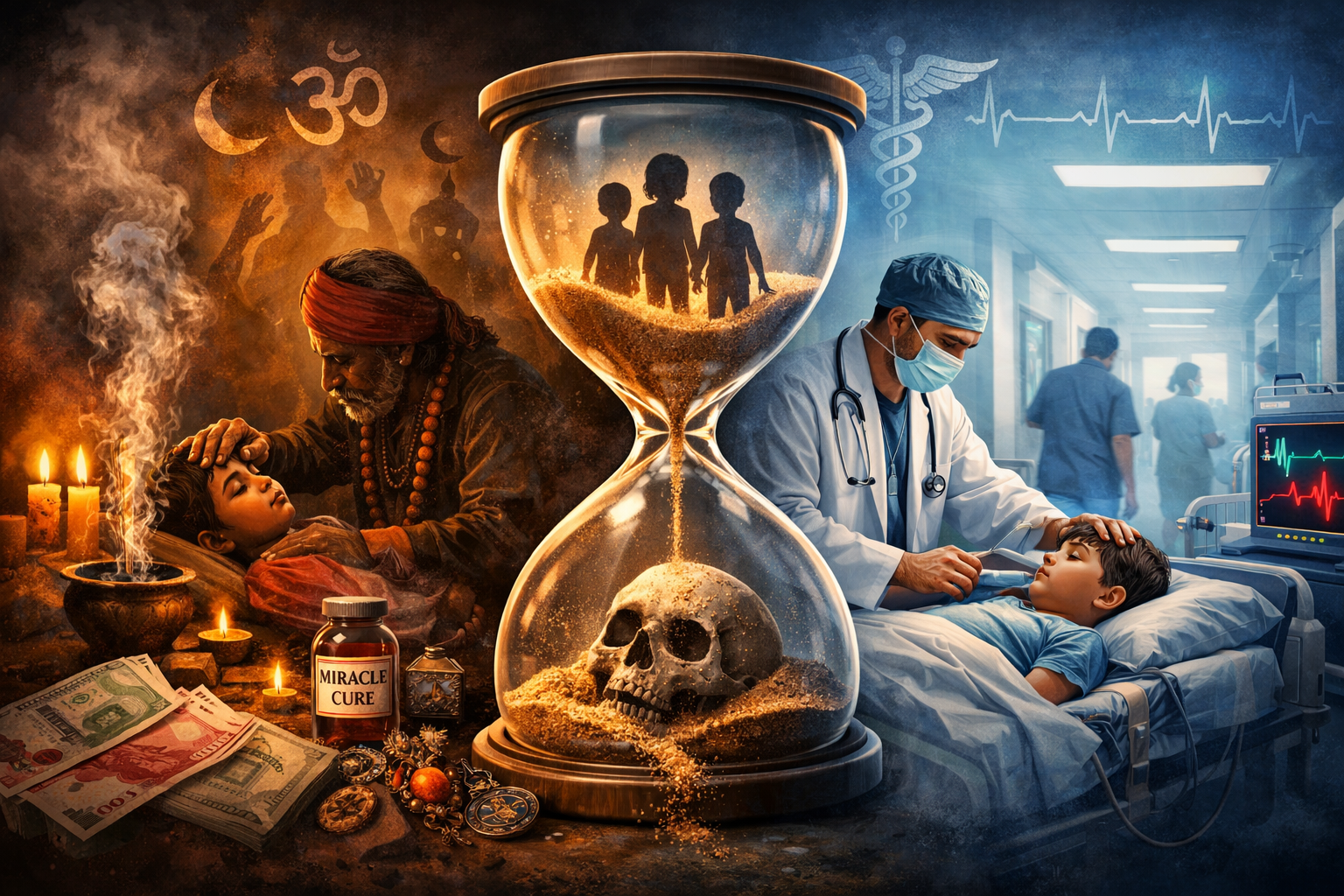
In November 2025, a quiet village in Chhattisgarh’s Gariyaband district became the site of an avoidable tragedy. Three siblings—aged eight, seven, and four—developed high fever and weakness within days of one another. Instead of being taken to a health centre, the family sought help from a local baiga, a traditional faith healer. Rituals were performed, chants were recited, and assurances were given. Medical care was delayed. Within forty-eight hours, all three children were dead. Local officials later confirmed that timely medical intervention could have saved their lives. The incident was reported by The Times of India as a clear case of superstition overriding medical judgment.
Only weeks later, in Pune, police booked two individuals who claimed they could cure cancer and bring wealth through prayer sessions. Vulnerable patients were charged money and encouraged to abandon medical treatment. The case was registered under state anti-superstition laws after complaints from families who realised, too late, that faith had been sold to them as medicine.
These are not isolated incidents. They are contemporary examples of a deeper problem: faith healing continues to operate as a socially accepted form of superstition, despite overwhelming scientific evidence against its medical claims.
What Faith Healing Claims—and What It Actually Is
Faith healing refers to the belief that illness can be cured through spiritual intervention—prayer, ritual, sacred objects, divine touch, or the supposed powers of a healer. Across cultures, such practices draw legitimacy from religion and tradition. In India, references are often made to ancient texts like the Atharva Veda, which contains hymns addressing fever and disease. Christianity cites Gospel stories of miraculous cures. Islam has ruqyah, Buddhist traditions have chanting, and folk practices across South Asia rely on ritual healing.
Historically, these practices emerged in eras when scientific medicine did not exist. Disease was mysterious, unpredictable, and frightening. Spiritual explanations were the only frameworks available. The problem arises when these symbolic, pre-scientific practices are presented today as medical alternatives rather than cultural or emotional supports.
At that point, faith healing stops being belief and becomes superstition.
Why Faith Healing Persists Despite Science
Faith healing survives not because it works, but because it satisfies psychological and social needs.
First, it offers certainty. A healer says, “You will be cured.” Medicine, by contrast, speaks in probabilities and risks. In moments of fear, certainty is seductive.
Second, it offers meaning. Illness feels less frightening when framed as destiny, karma, evil eye, or spiritual imbalance rather than random biological failure.
Third, it offers accessibility. In many rural or underserved areas, healers are closer, cheaper, and culturally familiar than hospitals.
Fourth, it thrives on selective memory. People remember the rare case where symptoms improved after prayer but forget the many cases where prayer failed—or where improvement would have happened anyway due to natural recovery.
None of this, however, establishes effectiveness. Psychological comfort is not medical cure.
The Scientific Verdict: Why Faith Healing Is Superstition
A belief system becomes superstition when it makes causal claims about the physical world without evidence, mechanism, or testability. Faith healing meets all these criteria.
There is no plausible biological mechanism by which prayers, chants, or rituals can kill bacteria, reverse organ failure, repair damaged tissue, or stop cancer progression.
There is no reproducible evidence showing faith healing works beyond placebo effects. Placebo responses may reduce pain or anxiety temporarily, but they do not cure infections, metabolic disorders, or life-threatening conditions.
There is no accountability. Faith healers do not systematically record failures, publish data, or revise their methods when predictions fail. Science progresses by admitting error; superstition survives by ignoring it.
As philosopher David Hume observed, “A wise person proportions belief to the evidence.” Faith healing asks people to do the opposite.
When Superstition Becomes Lethal
The real danger of faith healing is not belief itself but delay.
Most deaths linked to faith healing occur not because rituals directly kill, but because medical treatment is postponed until it is too late. Fever becomes sepsis. Infection becomes organ failure. Cancer advances unchecked. Children, the elderly, and the poor suffer the most.
The Chhattisgarh case illustrates this brutally. The children did not die because medicine failed; they died because medicine was never given a chance.
Faith healing, when used as a substitute for treatment, is not harmless belief. It is a public health hazard.
The Business of Superstition
Modern faith healing is not merely cultural practice; it is also commerce. Across India, self-styled godmen and healers charge for prayers, “special rituals,” amulets, oils, and private sessions. Some operate online, collect donations through digital platforms, and promise cures for serious diseases.
This is not faith—it is commercial exploitation of suffering.
Wherever miracles are marketed, patients are converted into customers. And where profit depends on belief, questioning becomes dangerous.
Law, Policy, and the Duty of Rational Society
India’s legal framework has begun to respond. With the replacement of the Indian Penal Code by the Bharatiya Nyaya Sanhita (BNS), acts causing harm through negligence, fraud, or deception can attract criminal liability. State anti-superstition laws, such as those in Maharashtra, explicitly criminalise exploitative and harmful ritual practices.
Beyond law, there is a constitutional duty. Article 51A of the Indian Constitution calls for the development of scientific temper. This is not anti-religion; it is pro-human life.
Public policy must focus on three priorities: strengthening accessible healthcare, regulating false medical claims, and promoting critical thinking through education and media.
Clear Messages for Moving Forward
First, faith is not medicine. It may comfort the mind, but it cannot cure disease.
Second, delay kills. Any practice that discourages timely medical care is dangerous, regardless of tradition.
Third, extraordinary claims require extraordinary evidence. Until faith healing meets scientific standards, it must not be treated as healthcare.
Fourth, critical thinking is compassion. Questioning superstition is not disrespect—it is protection of the vulnerable.
Conclusion
Faith healing persists because fear persists. But fear cannot be cured by belief alone. In the twenty-first century, continuing to treat faith healing as a medical alternative is not cultural pride; it is collective negligence.
The children in Chhattisgarh did not die because science failed them. They died because superstition replaced science.
A society committed to critical thinking must draw a firm line: belief may guide personal meaning, but health decisions must be guided by evidence. Anything less is not faith—it is a gamble with human life.
References –
- The Times of India, “Fatal delay: 3 siblings die in Chhattisgarh after family chooses baiga over medical care,” Nov 2025
- The Times of India, “Two booked for claiming cancer cure through prayer,” Dec 2025
- World Health Organization, Guidelines on Emergency and Sepsis Care
- David Hume, An Enquiry Concerning Human Understanding
- Carl Sagan, The Demon-Haunted World
- Bharatiya Nyaya Sanhita (BNS), 2023
- Maharashtra Prevention and Eradication of Human Sacrifice and Other Inhuman, Evil and Aghori Practices Act